How to Tell If a Tree Needs to Be Removed
Warning Signs That Could Mean Your Tree Is Becoming a Safety Risk

Trees can live for decades, sometimes centuries, but they don't last forever. Disease, decay, storm damage, structural problems, and changes to the surrounding property can all affect a tree's health and stability over time.
The challenge for homeowners is knowing when a tree simply needs some attention and when it may pose a risk to people or property.
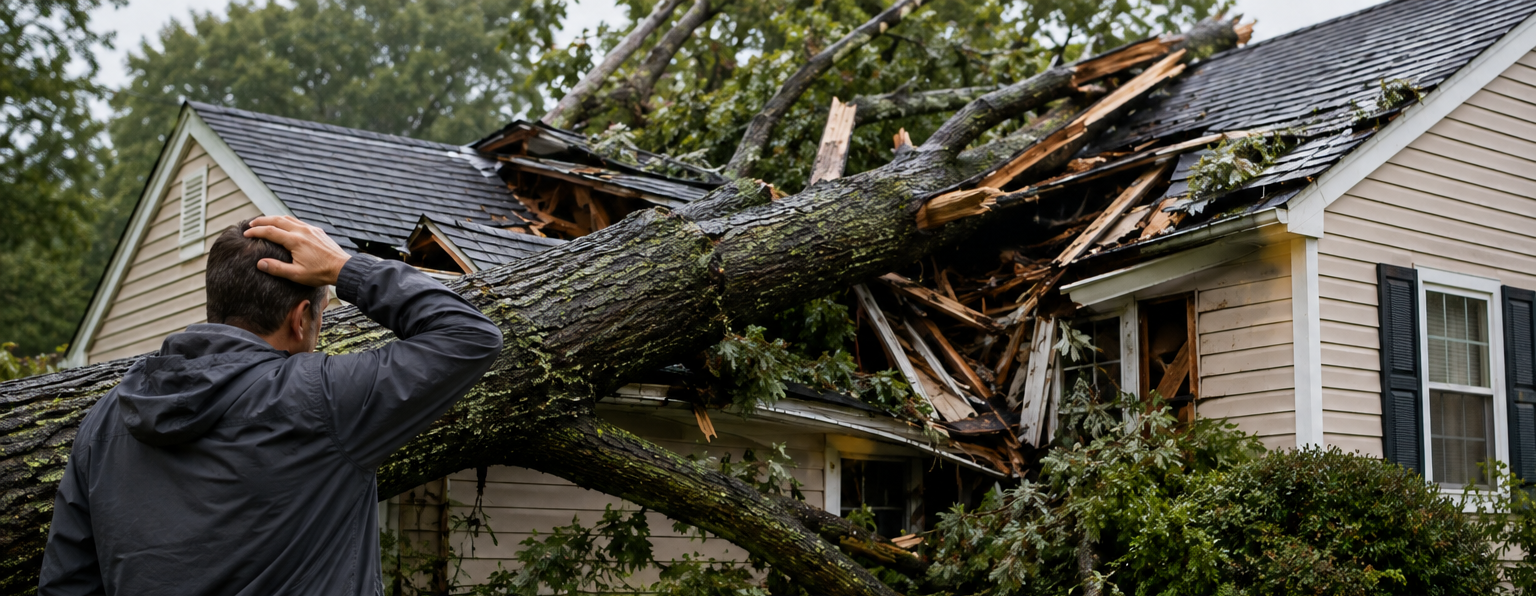
Some of the signs a tree needs to be removed are obvious, such as a large tree that has fallen or split during a storm. Others can be much harder to recognize.
Here are some warning signs to watch for and when it may be time to call a professional for an evaluation.
1. The Tree Is Dead or Has Large Dead Sections
A completely dead tree is one of the clearest candidates for removal. Without living tissue to support continued growth, the tree will gradually weaken and become more susceptible to breaking.
The warning signs aren't always obvious, however. Look for:
- Branches that remain bare when the rest of the trees have leafed out
- Large sections of dead or brittle branches
- Bark that is falling off or missing in large areas
- Little or no new growth during the growing season
- Dry, brittle wood beneath the bark
A tree may also have significant dieback without being completely dead. Depending on the extent of the damage, pruning may be enough to address the problem, or removal may eventually become necessary.
A professional tree evaluation can help determine how much healthy tissue remains and whether the tree can reasonably be preserved.
2. There Are Signs of Decay in the Trunk
The trunk is the primary structural support for a tree, so significant decay can be a serious concern.
Large cavities, soft or crumbling wood, extensive areas of missing bark, and visible rot may indicate that the tree's internal structure has been compromised.
Mushrooms or other fungal growth around the trunk or base of the tree can also warrant a closer look. Fungi don't automatically mean a tree needs to come down, but certain types of fungal growth can be associated with decaying wood.
The difficult part is that trees can sometimes appear relatively healthy on the outside while decay is occurring internally.
If you notice significant changes to the trunk, have the tree evaluated rather than trying to determine its structural condition based on appearance alone.
3. The Tree Is Leaning, Especially If the Lean Is New
Not every leaning tree is dangerous.
Some trees naturally grow at an angle and remain structurally stable for decades. What is more concerning is a tree that has recently started leaning or whose angle has noticeably increased.
Pay particular attention if the lean is accompanied by:
- Cracked or lifting soil around the base
- Exposed or damaged roots
- Cracks in the trunk
- Recent storm damage
- A lean toward a house, driveway, road, utility line, or frequently used area
A sudden change in a tree's position can indicate that its root system or structural stability has been compromised.
If a large tree suddenly begins leaning, especially after severe weather, it's a good idea to keep people away from the area until the tree can be professionally evaluated.
4. The Roots Are Damaged or Decaying
You can see the trunk and branches of a tree, but much of the structure keeping it upright is underground.
Root problems can therefore be difficult for homeowners to detect.
Construction, excavation, soil compaction, driveway installation, landscaping projects, flooding, and other changes around a tree can damage its root system.
Visible warning signs may include exposed or severed roots, fungal growth near the base, thinning foliage, declining branches, or changes in the soil around the tree.
Severe root damage can affect both the health and stability of a tree, which is why changes around the base shouldn't be ignored.
5. Large Branches Are Dying or Breaking
An occasional dead branch doesn't necessarily mean the entire tree needs to be removed. In many cases, proper pruning can address isolated dead or damaged limbs while allowing the rest of the tree to remain healthy.
The situation becomes more concerning when there is extensive dieback throughout the canopy or multiple large limbs begin failing.
Large dead branches can fall unexpectedly, particularly during high winds, heavy rain, snow, or ice. Their location matters too. A declining branch directly above a house, driveway, patio, sidewalk, or play area may require more immediate attention than one over an unused part of a property.
A Certified Arborist can help determine whether targeted pruning is sufficient or whether the declining canopy is a symptom of a larger problem.
6. The Tree Has Significant Storm Damage
Connecticut storms can put tremendous stress on mature trees.
High winds, heavy rain, snow, and ice can break major limbs, split trunks, damage roots, or cause a tree to partially uproot.
Some storm-damaged trees can be saved with proper pruning and care. Others may be too structurally compromised to remain safely in place.
After a major storm, look for:
- Split trunks or major limbs
- Hanging or broken branches
- Newly leaning trees
- Uprooted or exposed roots
- Large cracks
- Significant loss of the tree's canopy
Storm damage isn't always easy to assess from the ground. If you're unsure about a damaged tree, particularly one close to your home, avoid standing or parking beneath it until it has been inspected.
7. The Tree Has Structural Problems
Trees don't always grow in ways that create strong structures.
Multiple trunks, weak branch attachments, large cracks, and previous damage can all affect how forces are distributed through a tree.
One structural issue doesn't automatically mean removal is necessary. The severity of the defect, size and species of the tree, its overall health, and what could be damaged if part of the tree fails all need to be considered.
This is an area where professional evaluation is particularly important. What looks like a minor crack to a homeowner may deserve closer attention, while a dramatic-looking feature may actually be relatively stable.
8. The Tree Is Too Close to a Structure, and Is Causing Problems
A tree doesn't necessarily need to be removed simply because it's close to a house.
However, location becomes more important when a tree is already unhealthy, structurally compromised, damaging a structure, or creating a problem that cannot reasonably be corrected through pruning or other tree care.
For example, you may need to consider removal if a declining tree is leaning toward your home, repeatedly dropping large limbs onto a roof, or creating another significant property concern.
The decision should be based on the condition of the tree and the specific risks it presents, not distance from a structure alone.
Does Every Unhealthy Tree Need to Be Removed?
No.
One of the most important things to understand about the signs a tree needs to be removed is that many of them can also indicate problems that may be manageable.
Dead branches can often be pruned. Some diseases can be managed. A mature tree may have a cavity and still retain adequate structural strength. Even certain storm-damaged trees can recover with appropriate care.
That's why it's important to look at the entire tree rather than one symptom.
The tree's species, age, overall health, structural condition, location, and potential targets all factor into the decision.
When Should You Call a Certified Arborist?
If you're concerned about a tree but aren't sure whether it needs to be removed, a professional evaluation is the best next step.
An ISA Certified Arborist has specialized knowledge of tree biology, health, pruning, structural issues, and tree care. Rather than assuming removal is necessary, an arborist can evaluate the tree and help determine whether pruning, monitoring, other tree care, or removal is the appropriate option.
You should consider scheduling an evaluation if you notice significant decay, a new lean, large dead branches, root damage, cracks, storm damage, or other major changes in a tree's condition.
Concerned That a Tree May Need to Be Removed?
Recognizing the signs a tree needs to be removed is an important first step, but determining whether a tree is actually unsafe isn't always straightforward.
At Budget Tree & Stump Removal, our team has more than 25 years of experience caring for trees throughout Fairfield County and surrounding Connecticut communities. With an ISA Certified Arborist leading our team, we can evaluate your tree, explain what we're seeing, and recommend an appropriate course of action.
If removal is necessary, our experienced team has the equipment and expertise to remove trees safely and efficiently while taking care to protect the surrounding property.
Concerned about a tree on your property? Contact Budget Tree & Stump Removal to schedule an evaluation or request an estimate.